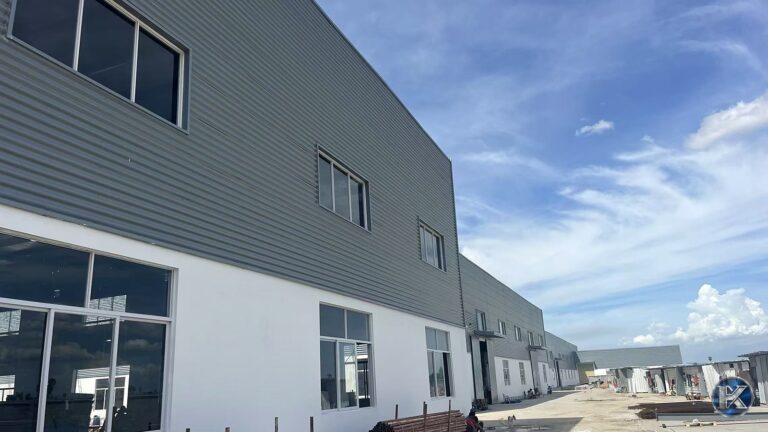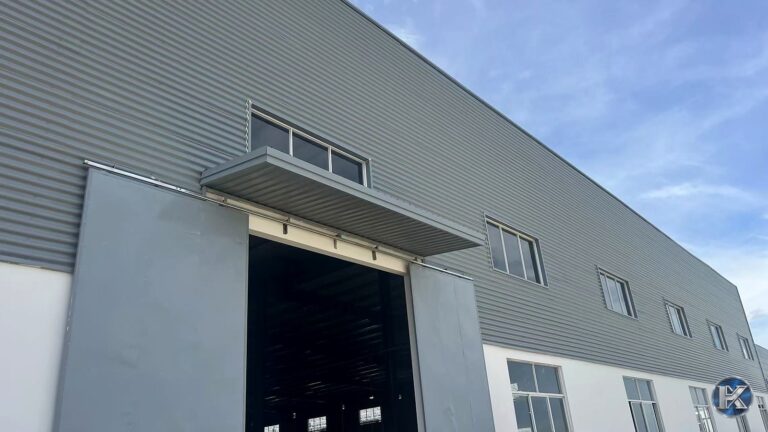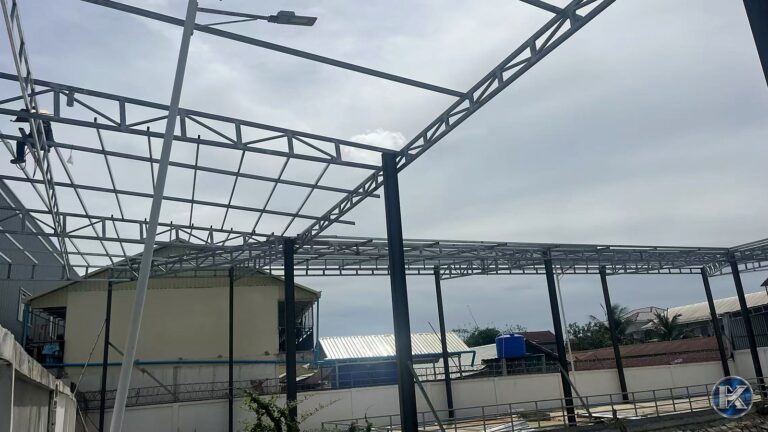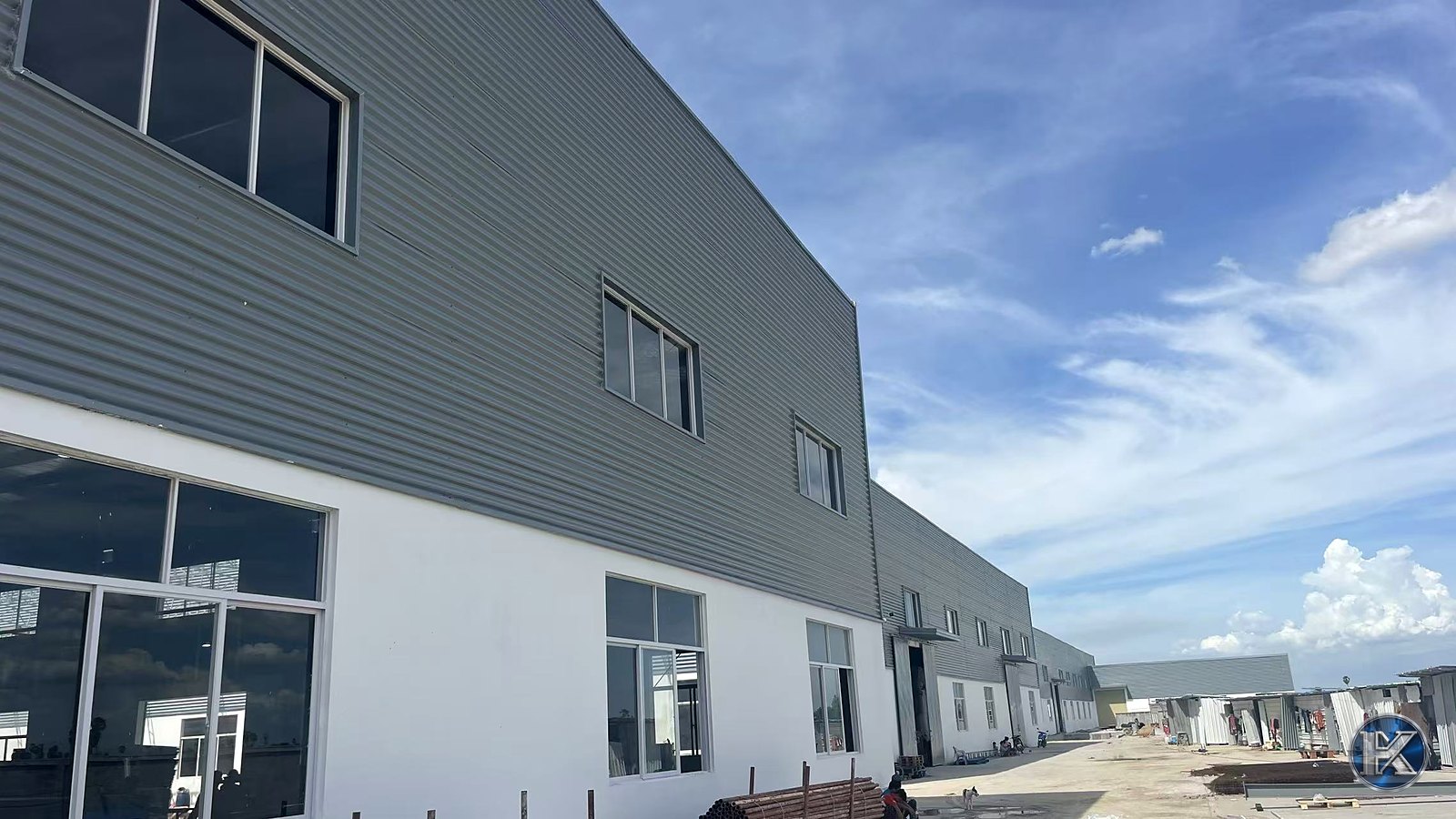
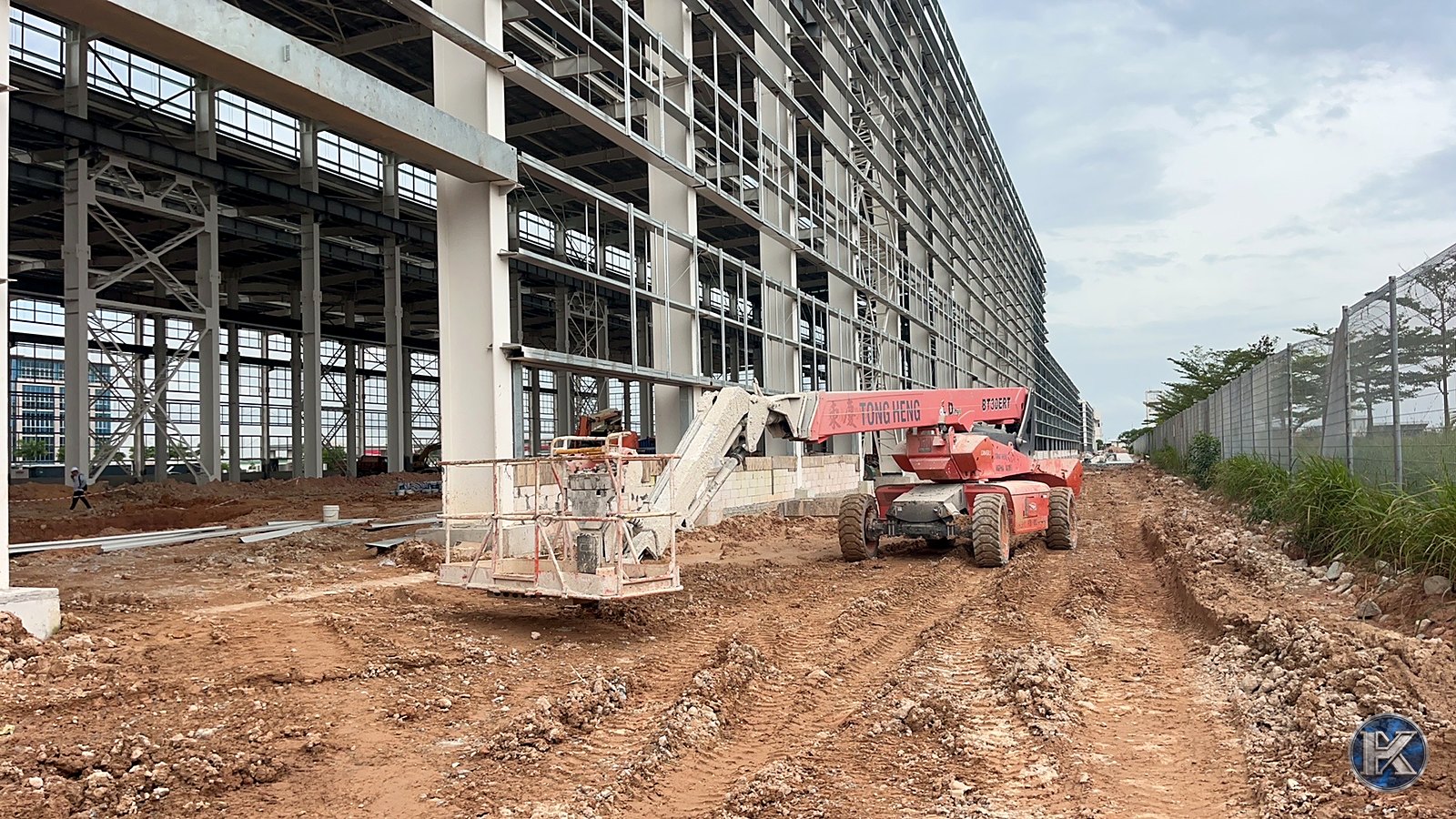
Selecting a steel warehouse supplier for a 10,000 m² project in Southeast Asia requires more than comparing steel tonnage and price. The supplier must respond to the project location, wind and rain exposure, local approval process, export logistics and available erection resources.
Wind resistance must be demonstrated through the complete load path
Wind design involves more than the main columns and rafters. Roof and wall panels, fasteners, purlins, bracing, connections, column bases and foundations all transfer load. The design team should state the project location, governing design standard, wind parameters, terrain assumptions and building importance used in the calculation.
Ask how roof corners, eaves, canopies, large doors and translucent panels are detailed, because local wind pressure can be higher in these zones. A statement that a building can resist a named “typhoon level” is not enough without the underlying design basis and connection details.
Quality should be supported by material and inspection records

Request information about steel traceability, welding procedures, inspection points, bolt certificates, dimensional checks, surface preparation and coating requirements. The packing method should protect identification marks, machined surfaces and coatings during export transport.
Site quality checks should cover anchor-bolt position, erection tolerances, bolted and welded connections, temporary stability and coating repairs. Photographs are useful, but inspection reports and signed records provide stronger evidence that the agreed process was followed.
Break the delivery promise into verifiable milestones
For an overseas steel warehouse, the programme should identify dates for drawing approval, material procurement, fabrication completion, packing, shipment, customs clearance, arrival, erection and handover. Each milestone should state its dependencies.
Foundation handover, import documentation, lifting equipment, site labour, temporary works and weather allowances should be assigned to named parties. When reviewing a supplier, compare planned and actual milestones from similar projects rather than relying only on a total number of days.
Supplier evaluation checklist
- similar project references with a clearly defined supply scope;
- design basis and responsibility for local code compliance;
- approved drawings and revision-control procedure;
- material traceability and inspection plan;
- coating, packing and export documentation;
- site supervision or erection responsibility;
- programme milestones, assumptions and delay responsibilities;
- handover documents and post-delivery support.
A reliable supplier makes the commercial and technical scope easy to verify. The quotation should explain what is included, what is excluded and what information is still required before the final design and price can be confirmed.
Planning a large steel warehouse in Southeast Asia? Send HUAXIN the location, dimensions, building use, design requirements and expected delivery schedule. Request a project quotation or send your brief through WhatsApp.